You notice a small, rough bump on your finger, the sole of your foot, or even your genital area. Naturally, you start to wonder: is this a wart? Could I pass it on to someone else? These worries are completely normal, because warts are a common skin condition that affects people of all genders and ages.
This article walks you through warts from the beginning: what causes them, the different types, how to tell genital warts apart from other bumps, treatment options, and prevention. The goal is to help you take care of yourself with confidence, without unnecessary worry.
What Are Warts and What Causes Them?
Warts are raised growths on the skin or mucous membranes caused by infection with the human papillomavirus (HPV). The virus makes cells in the outer layer of the skin multiply abnormally until they form a lump. Most warts are not cancerous, they spread through direct skin contact, and they can be treated in several ways depending on their type and location.
There are more than 200 types of HPV, and each type prefers a different part of the body. Types that favor ordinary skin cause warts on the hands, feet, or face. Types that favor the genital mucosa cause genital warts, which are classified as a sexually transmitted disease (STD).
The virus enters the body through scratches or tiny breaks in the skin, sometimes too small to see. Skin that is wet, cracked, or peeling picks up the virus more easily than healthy skin. After infection, it can take several weeks to several months before a wart becomes visible.
A common misconception is that hand warts and genital warts are the same condition and easily spread from one to the other. In fact, they are caused by different groups of HPV types. Having a wart on your hand does not mean you have an STD.
What Are the 5 Types of Warts? How to Identify Each One
Warts are classified by appearance and location into 5 main types: common warts, plantar warts, flat warts, filiform warts, and genital warts. Each type is caused by different HPV types and needs different care.
| Wart type | Common locations | Appearance | Common HPV types |
|---|---|---|---|
| Common warts | Fingers, backs of hands, around nails, knees | Firm, raised bumps with a rough, cauliflower-like surface; skin-colored or grayish | 1, 2, 4, 27, 57 |
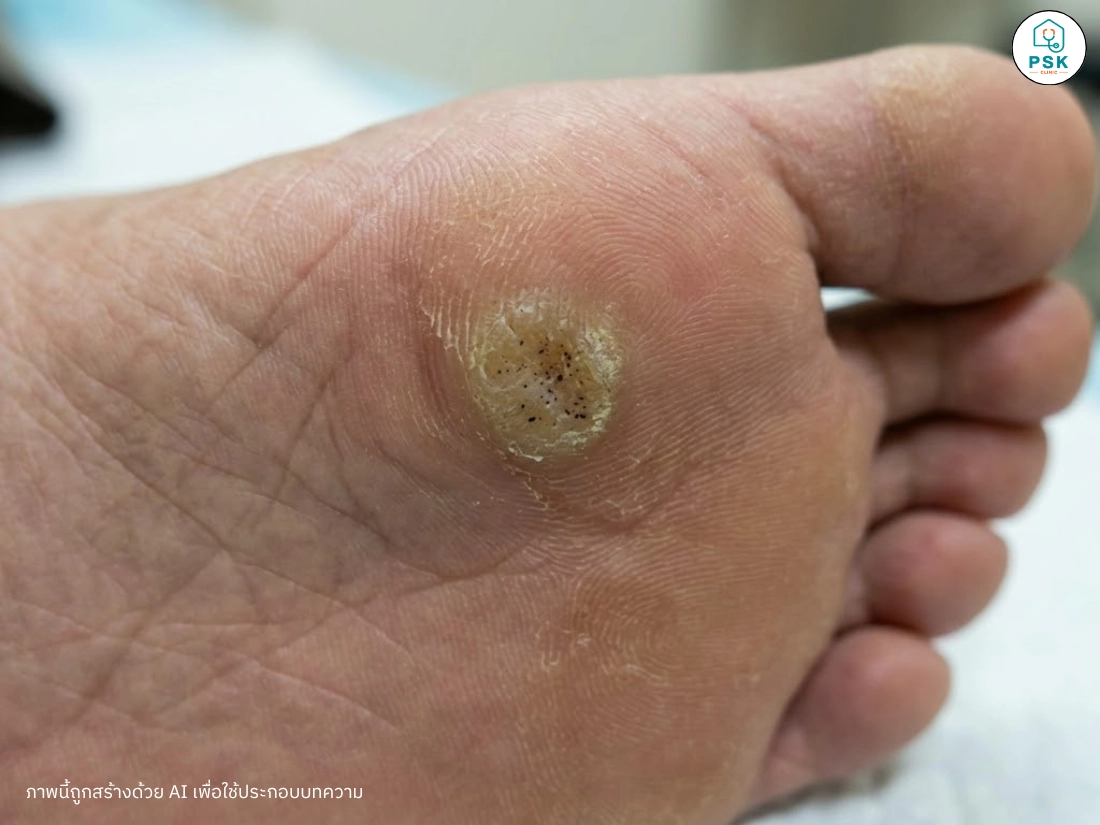
| Plantar warts | Soles, heels, base of toes | Flattened by body weight, with tiny black dots in the center; painful when walking | 1, 2, 4 |
| Flat warts | Face, forehead, backs of hands, legs | Small, flat, smooth bumps that appear in clusters | 3, 10 |
| Filiform warts | Around the mouth, nose, eyelids | Long, thin, thread-like projections | 1, 2, 4 |
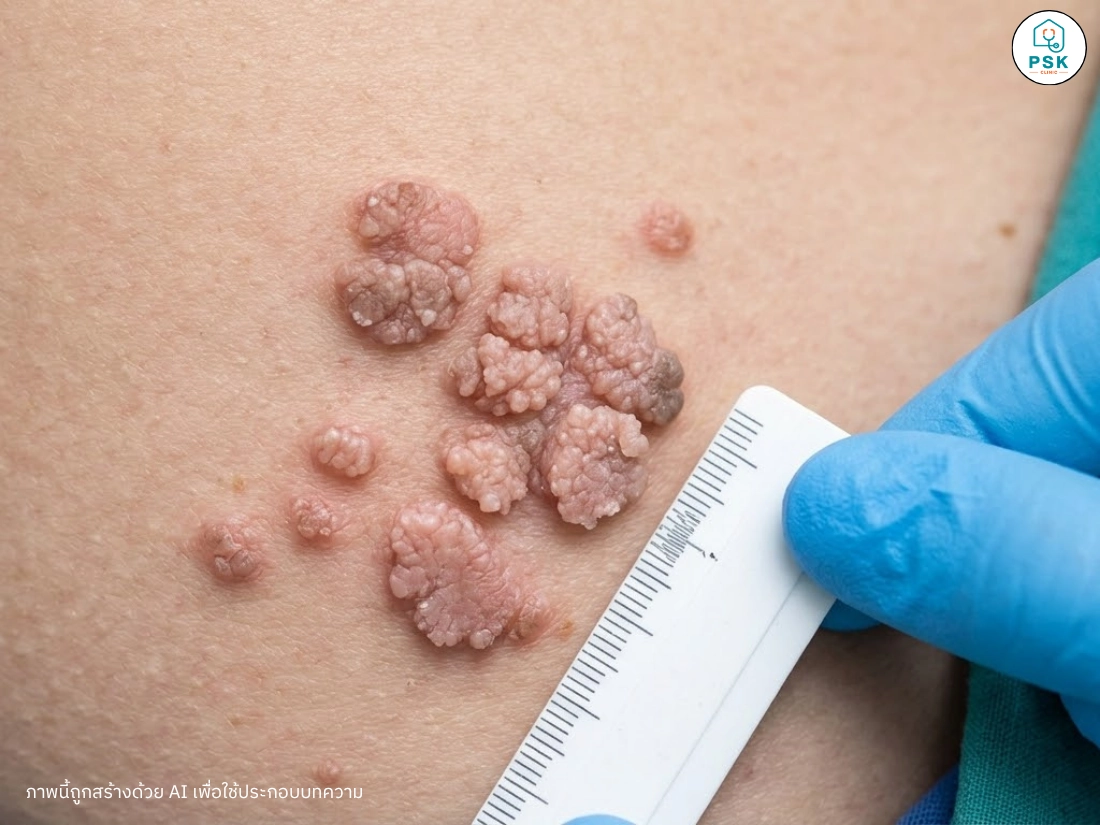
| Genital warts (Condyloma acuminata) | Genitals, groin, around the anus | Soft, pink or skin-colored growths, single or clustered like a cockscomb | 6, 11 (about 90%) |
Common Warts and Filiform Warts
Common warts are most frequent in children and teenagers. They tend to appear where the skin is often scraped, such as around the nails of people who bite or pick at them. Filiform warts usually grow on the face and can grow quickly. Neither type is painful, but both can affect self-confidence.
Plantar Warts
Plantar warts are picked up by walking barefoot in damp public areas such as swimming pools, shared showers, or locker rooms. Body weight presses these warts flat and pushes them deep into the skin, so they can hurt when you stand or walk for a long time.
Flat Warts
Flat warts are small and only slightly raised, so they are often overlooked or mistaken for acne. Shaving can spread this type of wart in lines along the path of the razor.
Genital Warts
Genital warts are the only type in this group classified as an STD. The U.S. Centers for Disease Control and Prevention (CDC) states that about 90% are caused by HPV types 6 and 11, which are low-risk types that do not cause cancer (Reference: CDC STI Treatment Guidelines, 2021). Genital warts are covered in more detail in the next sections.
Are Warts Contagious? How Do They Spread?
Warts spread through direct skin contact with a wart, or through contact with objects and surfaces that carry the virus, such as shower floors, towels, or shoes. Genital warts spread mainly through sexual activity and skin contact in the genital area.
How Skin Warts Spread
Hand and foot warts can spread from person to person and from one part of your own body to another. Picking, scratching, or biting a wart spreads the virus to nearby skin. Wet floors in public places are a common source, because HPV survives longer in damp conditions than in dry ones.
People who get warts more easily include children and teenagers, people with frequently cracked or broken skin, people whose hands are often in water, and people with weakened immune systems, such as people living with HIV or those taking immunosuppressive medication.
How Genital Warts Spread
Genital warts spread through skin-to-skin contact during vaginal and anal sex. Sharing sex toys can also spread the virus, while transmission through oral sex is uncommon.
An important point is that HPV can be passed on even when no warts are visible. The UK’s National Health Service (NHS) states that genital warts are not spread by kissing, sharing towels, cutlery, cups, or toilet seats (Reference: NHS, Genital warts).
Condoms lower the risk of infection but do not fully prevent it, because the virus may be on skin that a condom does not cover, such as the scrotum, groin, or the area around the anus.
What Are the Symptoms of Genital Warts? How Long After Infection Do They Appear?
Genital warts are usually soft, pink or skin-colored growths with a rough surface. They may appear alone or in cauliflower-like clusters. Most are painless and typically appear several weeks to several months after infection, and in some people it can take a year or longer.
In men, common locations include the head and shaft of the penis, foreskin, scrotum, groin, and around the anus. In women, they can appear on the outer and inner labia, vaginal opening, vaginal walls, cervix, and around the anus. Warts around the anus can occur in people of any gender, even those who have never had anal sex.
Other symptoms may include:
- Itching or irritation in the affected area
- Bleeding from friction, for example during sex or while cleaning
- Discomfort or pain during sex
- Difficulty urinating, if a wart is close to the urethra
The CDC notes that most genital warts cause no symptoms and may appear months or even years after infection (Reference: CDC, 2021). So finding a wart today does not necessarily mean you were recently infected by your current partner. This matters a great deal in relationships, because it helps avoid unnecessary blame.
In people with weakened immunity, such as people living with HIV, genital warts may be larger, appear in more places, respond more slowly to treatment, and come back more often. Care should be planned closely with a doctor.
Is This Genital Bump a Genital Wart? Conditions That Are Often Confused
Not every genital bump is a genital wart. Several conditions look similar. Some are a normal part of the body, while others are different STDs that need different treatment. An examination by a doctor is the best way to get the right answer.
| Condition | Appearance | Contagious? | Needs treatment? |
|---|---|---|---|
| Genital warts | Rough-surfaced growths of uneven size, scattered | Yes | Depends on the case; a doctor can advise |
| Pearly penile papules | Tiny pearly-white bumps in neat rows around the rim of the head of the penis | No | No, a normal variation |
| Fordyce spots | Small yellowish-white spots, flat or slightly raised | No | No |
| Molluscum contagiosum | Round, smooth, shiny bumps with a central dimple | Yes | May clear on its own, or be treated to reduce spread |
| Skin tags | Soft, smooth flaps of skin on a small stalk | No | Not necessary unless bothersome |
| Secondary syphilis rash (Condyloma lata) | Flat, raised, moist patches, often around the anus or genitals | Yes | Must be treated with antibiotics |
As the table shows, the secondary syphilis rash, or condyloma lata, has a similar name and appearance to genital warts but is caused by an entirely different organism, a bacterium. Its treatment is completely different. If there is any doubt, a doctor may recommend a blood test to be sure.
Plantar Wart vs. Corn: What's the Difference?
A plantar wart is caused by a virus and is contagious, while a corn is caused by repeated pressure or friction and is not contagious. A simple way to tell them apart: plantar warts usually have tiny black dots and interrupt the natural lines of the skin, while a corn has a clear central core and the skin lines continue across it.
Doctors also use pressure to tell them apart. A plantar wart usually hurts when squeezed from the sides, while a corn hurts when pressed straight down. The black dots in a wart are clotted tiny blood vessels, not dirt.
Telling the two apart matters because they are managed differently. A corn improves when pressure is reduced, for example by changing shoes. A plantar wart needs the wart itself to be treated, and care should be taken not to spread it to others at home.
Do Warts Go Away on Their Own?
Many types of warts go away on their own once the immune system clears the virus, but the timing is unpredictable and can range from months to years. Most skin warts clear on their own within 2 years, and some genital warts clear within 6 months to 1 year.
The Pharmaceutical Journal states that most warts resolve on their own within 2 years, although some can take 5 to 10 years (Reference: The Pharmaceutical Journal). Even though warts can go away by themselves, many people choose treatment because warts interfere with daily life, hurt when walking, affect confidence, or raise concerns about passing them to people close to them. While waiting, warts may also grow or spread to other areas.
For genital warts, treatment aims to remove visible warts and relieve symptoms. It does not directly eliminate HPV from the body. The CDC states that there is no clear evidence that any one treatment is better than another, and warts often return within the first 3 months after treatment (Reference: CDC, 2021). Follow-up visits with a doctor help manage any new warts early.
In most people, the immune system clears HPV on its own over time. Looking after your overall health, getting enough sleep, and not smoking all help support your immune system.
What Are the Treatment Options for Warts?
Wart treatment depends on the type, size, number, and location of the warts. The main options are topical medications, cryotherapy with liquid nitrogen, acid application, and surgical removal or electrocautery. A doctor will choose the method that suits each person, and some people need a combination of methods.
Treating Skin Warts (Hands, Feet, Face)
- Salicylic acid: Removes the wart layer by layer. It needs to be applied consistently for several weeks, up to about 3 months. It should not be used on the face or genitals.
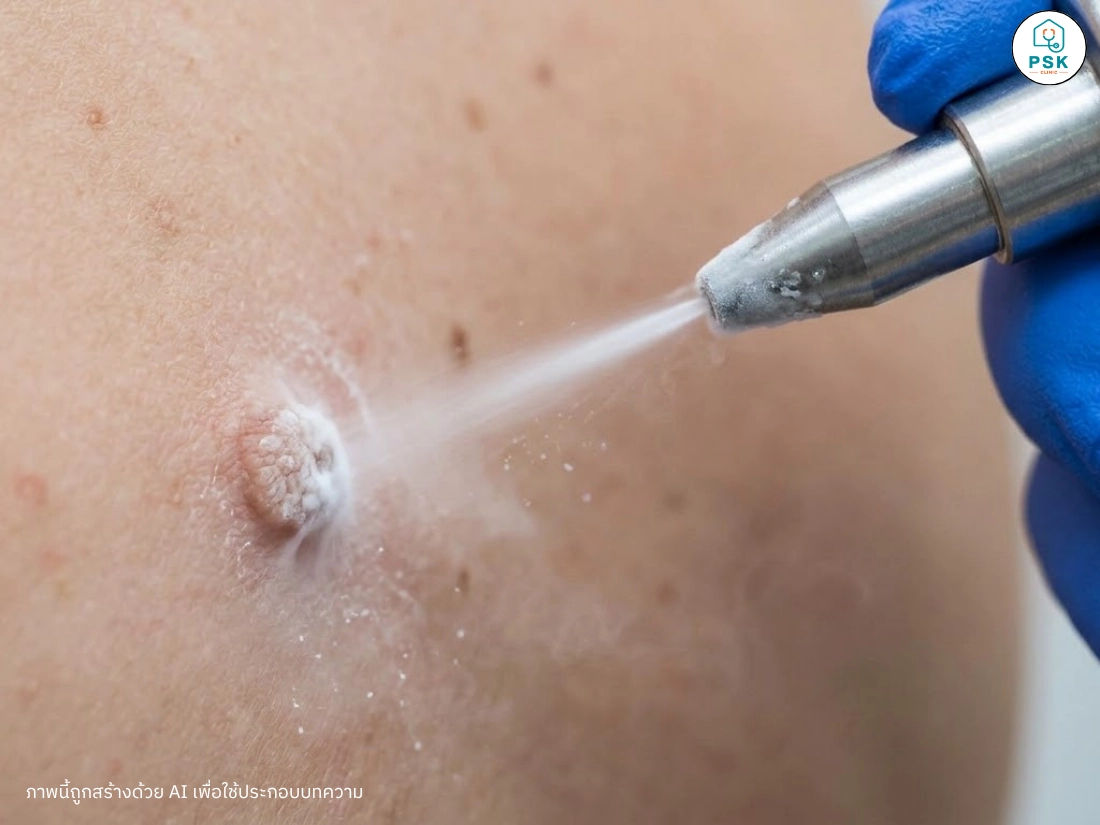
- Cryotherapy: Liquid nitrogen freezes and destroys the wart tissue. Treatment may need to be repeated every 2 to 3 weeks.
- Electrocautery, laser, or curettage: Used for large warts or warts that have not responded to other treatments.
Treating Genital Warts
The CDC’s 2021 STI Treatment Guidelines divide genital wart treatments into 2 groups.
| Group | Treatment | How it is used |
|---|---|---|
| Patient-applied treatments at home | Imiquimod cream 3.75% or 5% | Stimulates the local immune response; applied as prescribed for several weeks |
| Podofilox 0.5% | Applied in cycles of 3 days, followed by a break | |
| Sinecatechins 15% | Green tea extract; applied 3 times a day | |
| Provider-administered procedures | Cryotherapy with liquid nitrogen | Repeated every 1 to 2 weeks until the warts fall off |
| Trichloroacetic acid (TCA) 80–90% | Applied by the doctor only to the wart; suitable for small warts | |
| Surgical removal, electrocautery, or laser | Suitable for large or numerous warts |
Many topical treatments should be used under a doctor’s guidance, because they can irritate the genital skin, causing redness or sores. The choice of treatment should be made together with a doctor, taking into account convenience, cost, and the number of visits needed.
A frequently asked question is whether genital wart removal hurts. The answer depends on the method. Cryotherapy usually feels like a brief, sharp cold sting, similar to frostbite. For surgical removal or electrocautery, the doctor uses a local anesthetic first. Afterwards, there may be a shallow wound that heals within a few weeks.
Wart Treatment with Cryotherapy at PSK Clinic
PSK Clinic treats warts with cryotherapy, one of the methods recommended by the CDC for genital warts. The doctor first confirms that the bump really is a wart, then applies liquid nitrogen only to the wart itself. The extreme cold destroys the wart cells, which then gradually fall off on their own within 1 to 2 weeks.
Each cryotherapy session takes only a few minutes, requires no surgery, and most people can return to their normal daily activities afterwards. During treatment you may feel a brief cold sting. Afterwards there may be redness, swelling, or small blisters, which usually settle within a few days. Most warts need several sessions spaced 1 to 2 weeks apart, and the number of sessions depends on the size and number of warts in each person.
After treatment, keep the area clean and dry, do not pick at blisters or scabs, and avoid sex until the area has fully healed. Your doctor will schedule follow-up visits to check progress and treat any new warts while they are still small. Cryotherapy can also be used during pregnancy, but always tell your doctor before treatment.
What Not to Do If You Have Warts
Treating warts yourself the wrong way can lead to infected wounds, scarring, and more widespread warts. Things to avoid include cutting, picking, or pulling off warts yourself; burning them with incense sticks or other hot objects; applying substances of unknown ingredients; and using skin wart removers on the genitals.
The NHS warns that wart treatments sold in pharmacies are not designed for genital warts and should not be used on the genital area (Reference: NHS, Genital warts). The skin there is thinner and far more sensitive to irritation than the skin on the hands or feet.
People with diabetes or poor circulation in the feet should not treat plantar warts themselves, because even small wounds can become infected and heal slowly. Always have a doctor assess the wart first.
You should also see a doctor if a wart bleeds, changes color or shape quickly, is very painful, appears on the face or genitals, or does not improve with self-treatment.
How Can You Prevent Warts?
Skin warts can be prevented through good hygiene, not walking barefoot in damp public areas, and not sharing personal items. Genital warts can be prevented with the HPV vaccine combined with using a condom every time.
Preventing Skin Warts
- Wash your hands every time after touching a wart
- Wear flip-flops in shared showers, swimming pools, and locker rooms
- Do not share towels, socks, shoes, or razors
- Change your socks daily and keep your feet dry
- Cover warts with a plaster when swimming
- Stop biting your nails or picking the skin around them
Preventing Genital Warts with the HPV Vaccine
The 4-valent and 9-valent HPV vaccines cover types 6 and 11, the main causes of genital warts. They also cover the high-risk types linked to cervical, anal, and oropharyngeal (mouth and throat) cancers.
Data reviewed from 14 high-income countries found that 5 to 8 years after HPV vaccination programs began, genital wart diagnoses fell by 67% among people aged 15–19 and by 54% among people aged 20–24 (Reference: American Family Physician, 2025). These figures show that the vaccine genuinely reduces disease at the population level.
It is important to understand that the HPV vaccine does not treat existing warts. Even so, people who have already had genital warts still benefit, because the vaccine protects against other types they have not yet been exposed to. The vaccine offers strong protection when given before becoming sexually active, but adults can also be vaccinated on a doctor’s advice, regardless of gender or sexual orientation.
Prevention Through Safer Sex
Using a condom every time reduces the risk of HPV and other STDs. During genital wart treatment, avoid sex until the area has fully healed, and let your partners know so they can be checked too, as a way of caring for each other.
Regular STD testing is another way to catch problems early, because people with genital warts may have other infections at the same time without any symptoms.
Summary
Warts are caused by HPV, are common, and are mostly harmless. Warts on the hands, feet, and face often go away on their own, although this can take a long time. Genital warts are an STD and should be confirmed by a doctor, because several conditions look similar but need different care.
There are many treatment options, from topical medications to cryotherapy and minor surgery. Cryotherapy requires no surgery and can be used for warts on both the skin and the genitals, with the number of sessions depending on each person. Effective prevention includes the HPV vaccine, using condoms, and regular sexual health checkups. Above all, do not cut, pick, or use wart removers on your genitals yourself.
If you find a bump or growth you’re unsure about, there’s no need to feel embarrassed or worry alone. PSK Clinic offers wart examination and treatment with cryotherapy, as well as confidential STD testing, HPV testing, and HPV vaccination, regardless of gender or sexual orientation. Feel free to chat with us first on LINE @pskclinic or call 095-049-4142.
References
- Centers for Disease Control and Prevention (CDC). Anogenital Warts — Sexually Transmitted Infections Treatment Guidelines, 2021. https://www.cdc.gov/std/treatment-guidelines/anogenital-warts.htm
- Workowski KA, et al. Sexually Transmitted Infections Treatment Guidelines, 2021. MMWR Recomm Rep 2021;70(No. RR-4). https://www.cdc.gov/mmwr/volumes/70/rr/rr7004a1.htm
- NHS. Genital warts. https://www.nhs.uk/conditions/genital-warts/
- NHS. Warts and verrucas. https://www.nhs.uk/conditions/warts-and-verrucas/
- American Family Physician. Genital Warts: Rapid Evidence Review, 2025. https://www.aafp.org/afp/2025/0200/genital-warts
- The Pharmaceutical Journal. Warts and verrucas: assessment and treatment. https://pharmaceutical-journal.com/article/ld/warts-and-verrucas-assessment-and-treatment
Frequently Asked Questions About Warts
Do genital warts go away on their own?
Some genital warts clear on their own within 6 months to 1 year, but in other cases they grow or spread while you wait. Seeing a doctor helps confirm that they really are genital warts and helps you decide whether to wait or start treatment, based on their size, number, and symptoms.
Can a wart on my hand spread to my genitals?
The chance is very low, because hand warts are caused by different HPV types from genital warts. Even so, wash your hands every time after touching a wart and avoid picking it, to reduce spread to other areas of your body.
My partner has no warts at all, so why do I have genital warts?
HPV can be passed on even when no warts are visible, and warts may appear months or years after infection. The person who passed on the virus may not have known at all. Having genital warts now does not tell you who you got them from or when.
Can I still get genital warts after the HPV vaccine?
The chance is much lower, because the 4-valent and 9-valent vaccines cover types 6 and 11, which cause about 90% of genital warts. However, you can still be infected with other types the vaccine does not cover, or you may have been infected before vaccination.
Will genital warts come back after treatment?
They can come back, especially in the first 3 months after treatment, because treatment removes the visible warts but does not directly eliminate all of the HPV. Follow-up visits with a doctor help manage any new warts while they are still small.