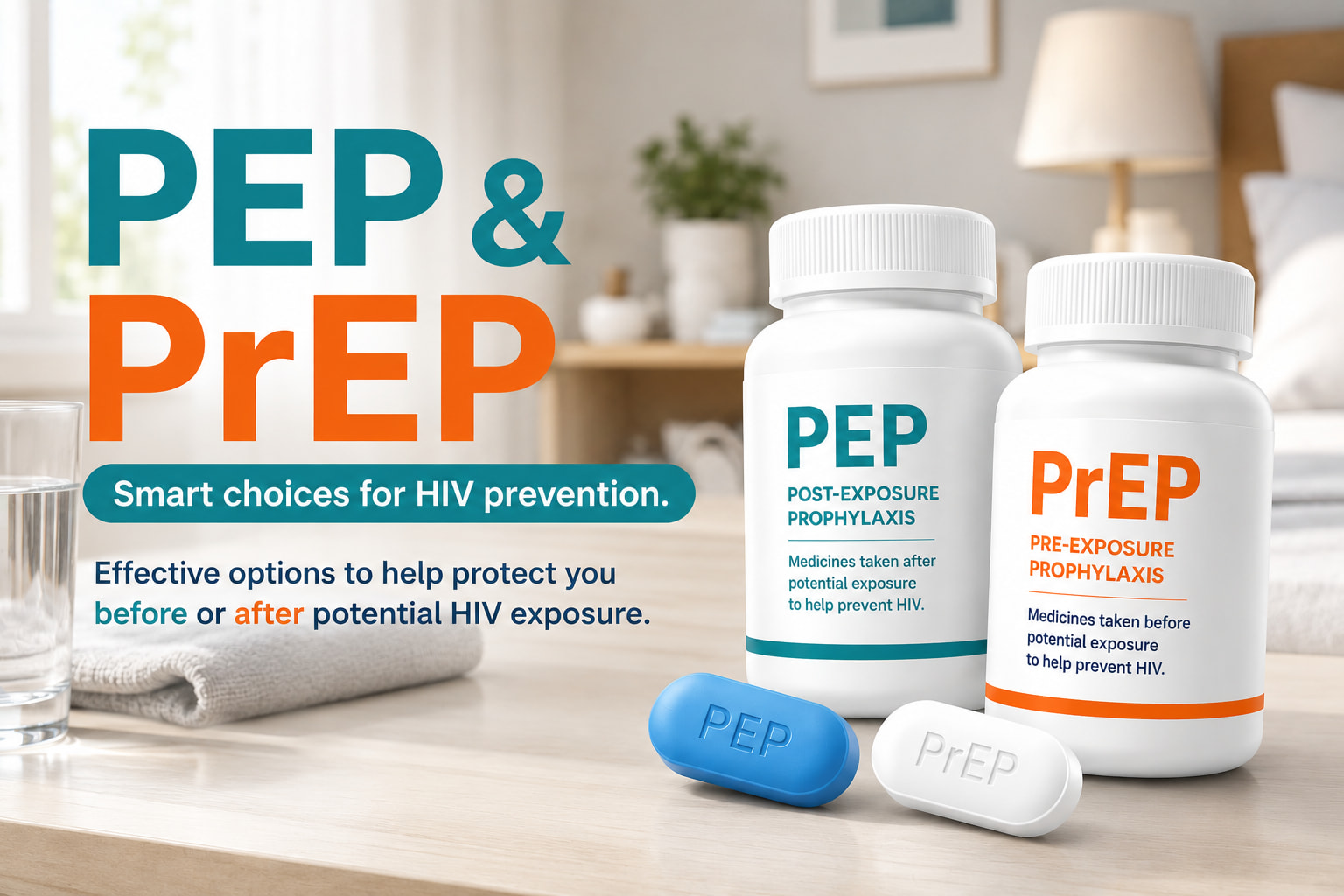
Whether you’re planning ahead or responding to an unexpected situation, knowing your HIV prevention options matters. PSK Clinic offers both PrEP and PEP medications at our Ladprao clinic in Bangkok, with English-language consultations available every day — private, clear, and free of judgment.
PrEP (Pre-Exposure Prophylaxis)
What is PrEP?
PrEP (Pre-Exposure Prophylaxis) is an antiretroviral medication taken before potential HIV exposure to prevent infection. When taken consistently, daily PrEP is up to 99% effective at preventing HIV transmission (WHO, 2022). It’s one of the most reliable HIV prevention tools available today — and it’s accessible to anyone who wants it.
Who Is PrEP Right For?
PrEP is appropriate for anyone who wants a proactive, reliable layer of HIV protection:
- People who are sexually active and prefer not to rely on condoms alone
- Individuals with partners whose HIV status is unknown or positive
- People in professions with higher HIV exposure risk
- Anyone who wants consistent protection before engaging in sexual activity
PrEP works for all genders. If you’re unsure whether it fits your situation, a short consultation is all it takes.
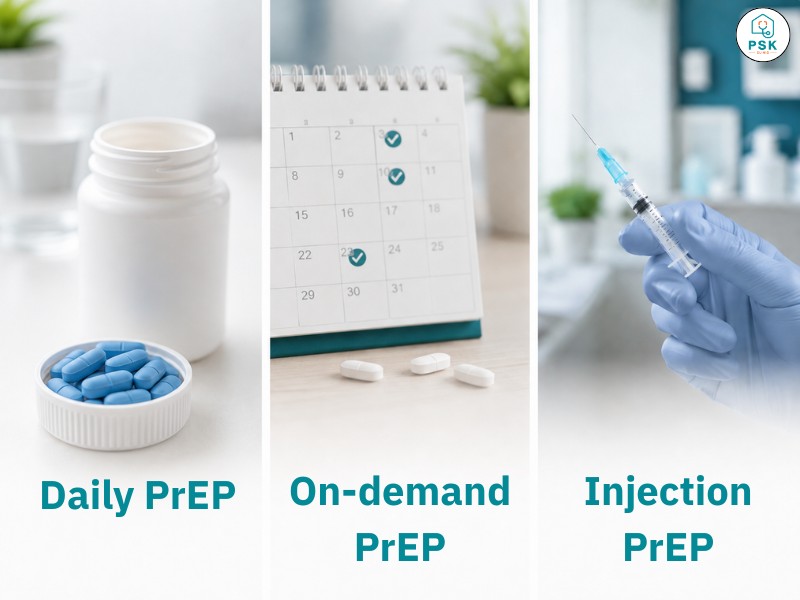
Three Ways of Using PrEP
PrEP combines two antiretroviral drugs — Tenofovir Disoproxil Fumarate (TDF) and Emtricitabine (FTC) — in a single tablet.
Daily PrEP
- Suitable for all genders
- Take one pill at the same time every day
- Reaches full effectiveness 7 days after starting
- Reduces HIV transmission risk by up to 99.9%
- Best for anyone whose sexual activity is unpredictable, including sex workers
On-Demand PrEP (2-1-1 Method)
- Designed for cisgender males and transgender woman only
- No daily pill required — taken around sexual activity
- The 2-1-1 schedule: take 2 pills 2–24 hours before sex, 1 pill 24 hours later, then 1 pill 24 hours after that
- Offers 97–99% protection when used correctly (WHO, 2019)
- A good option for people whose sexual activity is less frequent and easier to plan around
What PrEP Formulations Are Available — and What's the Difference?
Oral PrEP comes in two main formulation groups: TDF/FTC and TAF/FTC. Both contain Emtricitabine (FTC) and offer comparable effectiveness when taken consistently — the key difference is the type of Tenofovir used.
TDF/FTC combines Tenofovir Disoproxil Fumarate (TDF) with Emtricitabine (FTC). This is the most widely used formulation with the longest clinical track record. It’s available under several brand names — including Teno-EM and Tenof-EM — the active ingredients are identical; the difference is the manufacturer.
TAF/FTC combines Tenofovir Alafenamide (TAF) with Emtricitabine (FTC), for example the brand TAF-EM. This is a newer formulation with a lower impact on kidney and bone health compared to TDF — making it a better choice for people with pre-existing kidney concerns or bone density risks.
| Formulation Group | Active Drugs | Brand Names | Key Advantage |
|---|---|---|---|
| TDF/FTC | TDF + FTC | Teno-EM, Tenof-EM | Widely used, extensive long-term data |
| TAF/FTC | TAF+FTC | TAF-EM | Gentler on kidneys and bones |
The right formulation depends on your blood test results, kidney function, and individual health profile. Your doctor will help determine which suits you best.
What Is Injectable PrEP — and How Is It Different from the Pill?
Injectable PrEP is an HIV prevention option that doesn’t require a daily pill — designed for people who find daily medication difficult to maintain, or who want more privacy in how they manage their prevention routine.
Two injectable options are currently available:
Cabotegravir Long-Acting (CAB-LA) is an injectable PrEP recommended by the World Health Organization (WHO) for people at high risk of HIV. After an initial loading phase, it’s given every 2 months. In Thailand, CAB-LA has been available since February 2025 through registered healthcare providers.
Lenacapavir (Yeztugo) is a newer long-acting injectable requiring only 2 injections per year. See the section below for full details.
Injectable PrEP Every 6 Months — Lenacapavir (Yeztugo)
Lenacapavir is the longest-acting injectable PrEP currently available — administered as a subcutaneous injection just twice a year (every 6 months). It was approved by the US Food and Drug Administration (FDA) on June 18, 2025, and recommended by the World Health Organization (WHO) in July 2025.
Lenacapavir works as a capsid inhibitor — it blocks the protein shell that HIV requires to replicate inside the body. Phase 3 trials (PURPOSE 1 and PURPOSE 2) found that over 99.9% of participants receiving the drug remained HIV-free. In the PURPOSE 1 trial among women, protection was so close to 100% that the study was stopped early because the benefit was unambiguously clear.
“Having a PrEP option that only requires two injections a year makes a real difference for people who struggle with daily pills. Consistency is everything in HIV prevention.” — PSK Clinic Medical Team
For Thailand, Lenacapavir is expected to become available in the first half of 2026, subject to regulatory registration and distribution through authorized healthcare providers.
What Tests Do You Need Before Starting PrEP?
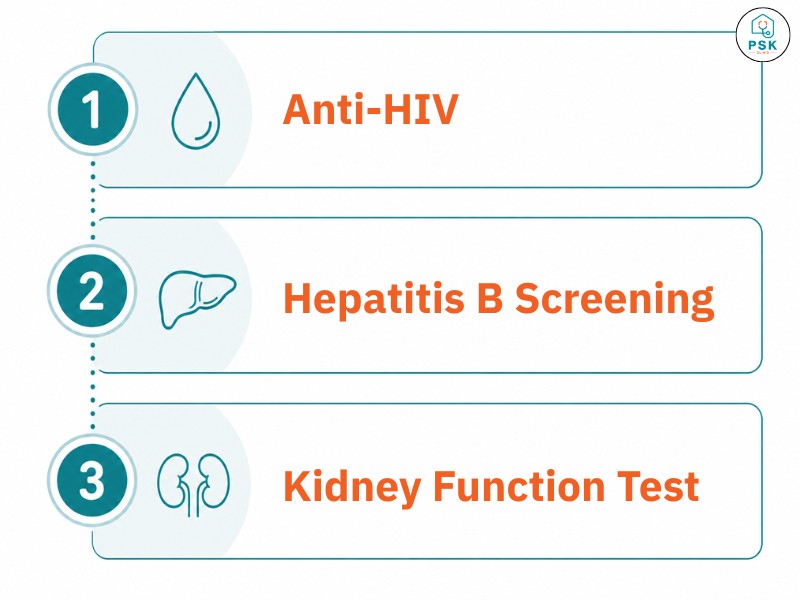
Before beginning PrEP, you’ll need a blood test covering three things:
- HIV status — a negative result is required to start
- Hepatitis B — some medications interact with hepatitis B treatment
- Kidney function — to confirm PrEP is safe for you
If any result is abnormal, your doctor will explain your options and what the right next step looks like.
What Are PrEP's Side Effects?
Some people experience mild nausea in the first few days of PrEP. This typically resolves on its own within 3–5 days and rarely requires stopping the medication.
Where Can You Get PrEP in Bangkok — and How Much Does It Cost?
PrEP is a controlled medication in Thailand that requires a medical evaluation before it can be prescribed. It is not available over the counter at pharmacies. You can access PrEP through:
- Government and private hospitals
- PSK Clinic — PrEP consultations and dispensing available every day
- Anonymous clinics
Cost: Pricing is approximately 1,200–2,500 THB per bottle, depending on the formulation and healthcare provider. Imported formulations may be priced higher. Your doctor will discuss which option fits both your health needs and budget.
PEP (Post-Exposure Prophylaxis) in Bangkok
What Is PEP?
PEP — Post-Exposure Prophylaxis — is an emergency course of antiretroviral medication taken after a potential HIV exposure. When started within 72 hours (ideally within 24 hours), PEP reduces the risk of HIV infection by up to 84–89% (CDC, 2023). The full course lasts 28 days and must be completed without interruption to be effective.
If you think you may have been exposed to HIV, the time to act is now.
Who Should Take PEP?
PEP is for anyone who has had a possible HIV exposure, including:
- Unprotected sex with a partner whose HIV status is unknown or positive
- Condom breakage or slippage
- Needlestick injuries or blood-splash accidents (including healthcare workers)
- Sexual assault
PEP is an emergency measure — it’s not designed for ongoing prevention. If you find yourself needing it more than once, that pattern of exposure is exactly what long-term PrEP is built for. Our team will walk you through your options without any judgment.
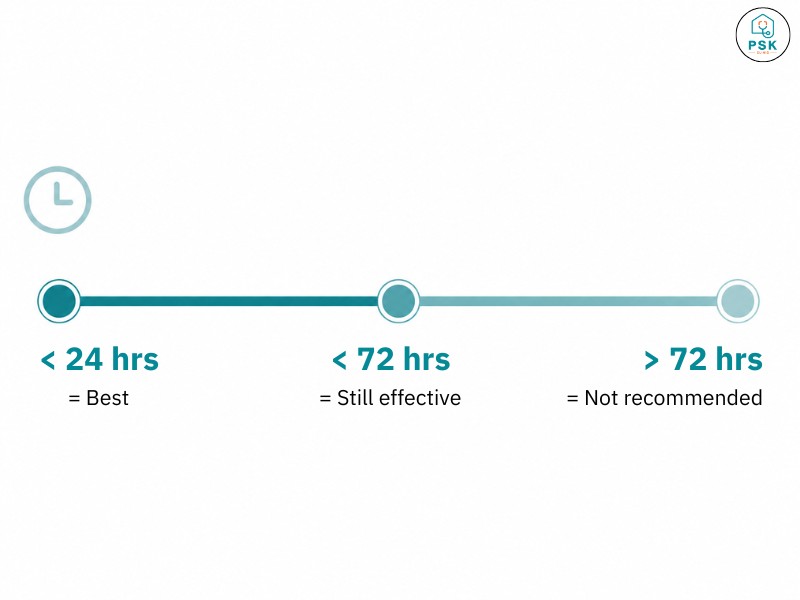
How Quickly Do You Need to Start PEP?
PEP must be started within 72 hours of potential HIV exposure. Starting within 24 hours gives the strongest protection. After 72 hours, PEP is no longer recommended — effectiveness drops significantly the longer you wait.
If you’re unsure whether your situation qualifies, reach out immediately. A brief risk assessment takes only a few minutes and can be done in person or via LINE before you come in.
What Tests Are Needed Before Starting PEP?
A negative Anti-HIV test result is required before beginning PEP. This confirms there’s no existing HIV infection — because PEP prevents infection, it cannot treat one that’s already present. The test is a simple blood draw, and results are usually available during the same visit at PSK Clinic.
Which PEP Medications Are Available?
PSK Clinic offers three modern PEP formulations — all gentle on the kidneys and liver, taken once daily with or without food:
| Formulation | Active Drugs | Key Advantage |
|---|---|---|
| KOCITAF | TAF + FTC + DTG (Dolutegravir) | Low organ impact, once daily |
| BIKTAVY | TAF + FTC + BIC (Bictegravir) | Low organ impact, once daily |
| Acriptega | TAF + 3TC (Lamivudine) + DTG (Dolutegravir) | Low organ impact, once daily |
All three are equally effective when the full 28-day course is completed. KOCITAF and BIKTAVY use Emtricitabine (FTC), while Acriptega uses Lamivudine (3TC) — a closely related drug with a similar safety and tolerability profile. Your doctor will recommend the formulation that suits your individual health needs and circumstances.
“Completing all 28 days without missing doses is the most important factor in how well PEP works. Even a small gap in the regimen can reduce protection meaningfully.” — PSK Clinic Medical Team
How much does PEP cost?
A full course of PEP typically ranges from 3,500 to 6,000 THB.
What Are PEP's Side Effects?
Most people tolerate PEP well. Mild side effects during the first few days may include:
- Nausea
- Headache
- Dizziness
- Difficulty sleeping
These typically ease within 3–7 days. If side effects feel unmanageable, speak with your doctor — switching to a different formulation can often resolve the issue without stopping treatment.
How Do You Take PEP?
One tablet per day, at roughly the same time each day, for 28 consecutive days. A daily phone reminder helps you stay on track. If you miss a dose, take it as soon as you remember — but don’t double up if your next dose is close. Just continue the regular schedule and let your doctor know.
After Finishing PEP — What Comes Next?
After completing the 28-day course, HIV follow-up testing is essential — twice:
- Immediately after finishing PEP — an early baseline result
- 3 months after the original exposure — the definitive test that confirms your status
A negative result right after finishing PEP is encouraging, but not final. The 3-month test is the one that gives you certainty. Please don’t skip it.
Can You Have Sex While Taking PEP?
Yes, but always use condoms throughout the full 28-day course. PEP reduces your personal risk of acquiring HIV from the specific exposure event. During treatment, there is still a possibility of transmission to others, so consistent condom use protects both you and your partner.
PEP for Travelers and International Visitors in Bangkok
If you’re in Bangkok and need emergency PEP, you don’t need a Thai hospital referral or a pre-booked appointment. PSK Clinic sees both Thai and international patients, with English-language consultations available every day from 11:00–19:00. For urgent situations, walk-ins are welcome — or message us on LINE @pskclinic first for a faster check-in.
We’re at Soi Ladprao 19, Chatuchak, Bangkok, a short walk from the MRT.
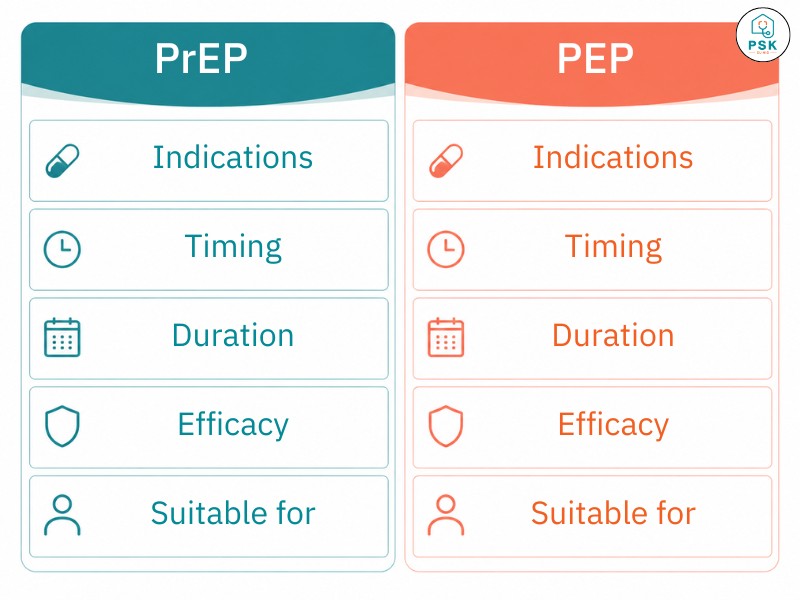
PrEP vs. PEP — What's the Difference?
Still figuring out which one you need? Here’s the short version:
| PrEP | PEP | |
|---|---|---|
| When to take | Before potential exposure | After potential exposure |
| Purpose | Ongoing HIV prevention | Emergency PEP HIV prevention |
| Duration | Daily, long-term | 28-day course |
| Time window | Start before risk | Start within 72 hours |
| Effectiveness | Up to 99% daily (WHO) | Up to 84–89% (CDC) |
| Best for | Anyone seeking continuous protection | Anyone responding to a specific risk event |
If you’ve just finished PEP and want reliable protection going forward, transitioning to PrEP is the natural next step. Our team will help you make that switch smoothly.
PrEP and PEP medicine delivery service.
For anyone who prefers not to visit the clinic in person, PSK Clinic offers a discreet home delivery service for both PrEP and PEP.

Each delivery set includes:
- 1 HIV self-test kit
- 1 bottle of PrEP or PEP.
A brief risk assessment with our doctor is required before each delivery to confirm eligibility and choose the right formulation.
Consult our doctor for medication.
Line: @pskclinic
Tel: 095-049-4142
Frequently Asked Questions
How much does PEP cost in Bangkok?
PEP pricing at PSK Clinic depends on the formulation prescribed. Contact us via LINE @pskclinic or call 095-049-4142 for current pricing — we’ll walk you through your options clearly, upfront.
What happens if I start PEP after 72 hours?
PEP is not recommended beyond the 72-hour window, as effectiveness drops significantly the later it’s started. If that window has passed, speak with our doctor about the right HIV testing timeline and what prevention steps make sense going forward.
Can I take PEP more than once?
Yes. PEP can be taken more than once. However, if repeated use reflects a pattern of regular high-risk exposure, long-term PrEP offers stronger, more consistent protection with much less to manage. Our team will help you find the right solution for your situation — no judgment.
Do I need a prescription to get PEP in Bangkok?
Yes — PEP is a prescription medication in Thailand. At PSK Clinic, the doctor will conduct a brief risk assessment and an Anti-HIV blood test before prescribing. The whole process, from walk-in to prescription, can be completed in a single visit.
After PEP, should I start PrEP?
If the circumstances that led to PEP are likely to recur, PrEP is worth discussing. It provides stronger, continuous protection (up to 99% with daily use) and is much easier to manage than repeated emergency courses. Ask about transitioning at your post-PEP follow-up visit.
Talk to Our Team
Decisions about HIV prevention — especially urgent ones — shouldn’t be complicated. PSK Clinic is here to make the process private, clear, and calm.
We’re open every day from 11:00–19:00. English service available. No appointment needed for urgent PEP cases.
LINE: @pskclinic Tel: 095-049-4142
References
- World Health Organization (WHO). Pre-exposure prophylaxis (PrEP) for HIV prevention. who.int, 2022.
- Centers for Disease Control and Prevention (CDC). Post-Exposure Prophylaxis (PEP). cdc.gov, 2023.
- WHO. Guideline on when to start antiretroviral therapy and on pre-exposure prophylaxis for HIV. 2019.
- Department of Disease Control, Ministry of Public Health Thailand. HIV Prevention Guidelines. ddc.moph.go.th.
- Fonner VA, et al. Effectiveness and Safety of Oral HIV Preexposure Prophylaxis for All Populations. AIDS, 2016.